Designing Party Play across HypeHype
Automatic parties, friend flows, and voice chat.
View project →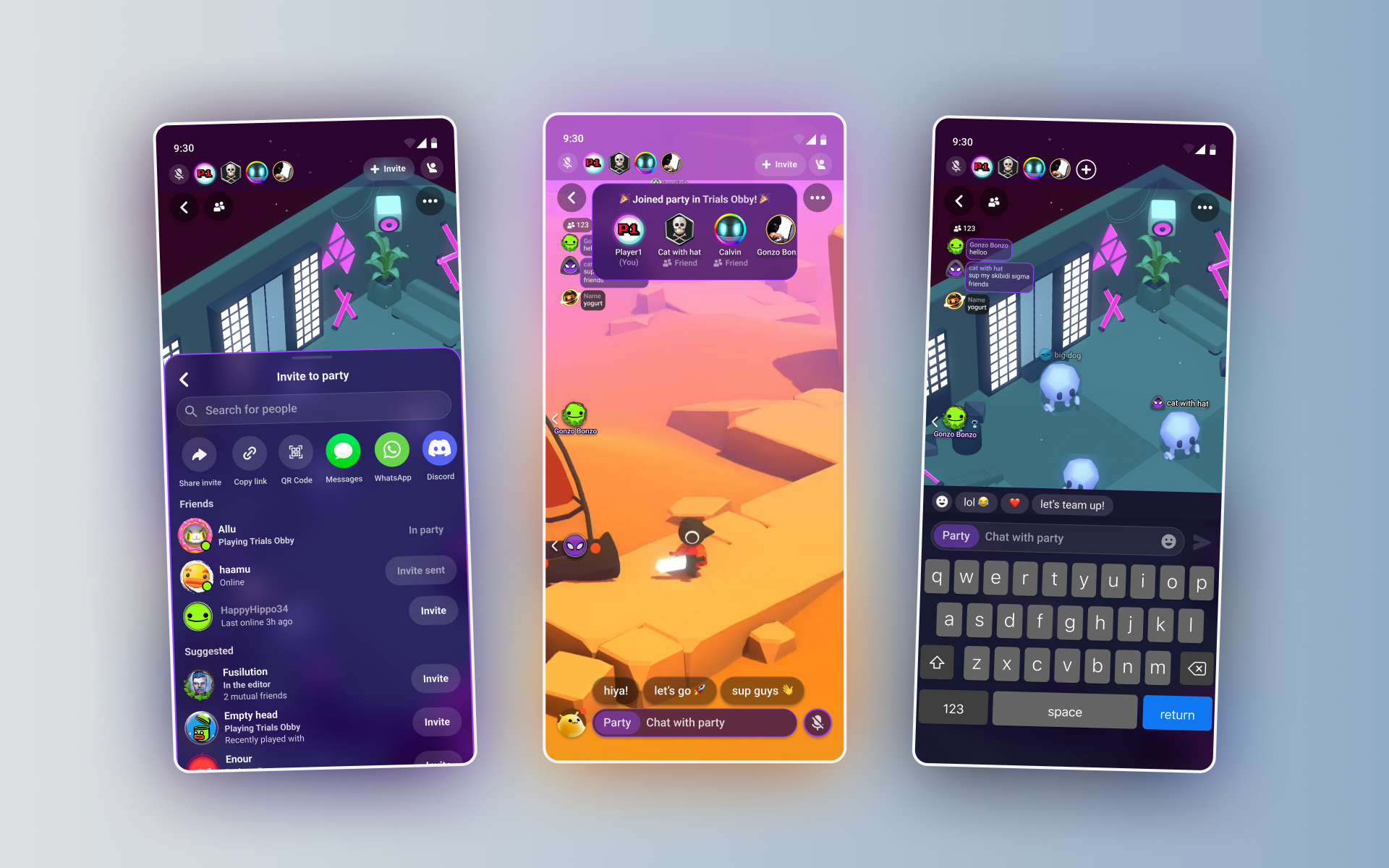
At Hiber, I designed HiberWorld's first commerce flow for buying and equipping Ready Player Me avatar items. Players could interact with an item inside a game world, open its product page over the game, sign in, pay through Stripe, then select Equip and close to return to the same world wearing it. The flow first launched with the Outer Kingdoms collection in 2023, followed by Tommy Parallel.
HiberWorld was a browser-based platform where people could play and create user-generated games. Ready Player Me was already integrated, so players could create an avatar and use it across HiberWorld. There was not yet a way to buy or unlock additional avatar items through the platform.
This project was our first test of real-money purchases inside HiberWorld. We kept the MVP focused on one complete journey: find an item in a world, understand what it was, sign in if needed, buy it, and equip it.
The product owner, engineers, and I defined the MVP and user journey together. I was mainly responsible for the layout and interface, the product page and account screens, and the experience from interacting with an item in the game to returning with it equipped.
The account and payment steps connected HiberWorld, Ready Player Me, and Stripe. A player could enter HiberWorld as a guest, but buying an item required a HiberWorld account so the purchase could be saved to both their HiberWorld and Ready Player Me accounts. The item could then also be used in other products that supported Ready Player Me.
When a player interacted with an avatar item, a web modal opened over the running game. They could review the item and its price without navigating to a separate store.
If the player was a guest, the flow asked them to sign up or log in before buying. Payment then redirected to Stripe inside the modal. After completing the purchase, the player returned to a confirmation page and could select Equip and close. The modal closed and their avatar was wearing the item in the same world.
I designed the product page, sign-up and login screens, confirmation page, and confirmation email as one journey. I also designed a custom payment page, but the released MVP used the Stripe redirect instead. The implemented payment step therefore differed from my original design.
The product page had to explain a digital item before asking players to sign in and pay. I reviewed product pages from games and fashion brands to decide what information it needed.
The page showed the item, its price, how it could be used, and the action needed to buy it. Its structure needed to remain consistent across collections while allowing the item imagery and partner branding to change.
I also explored a Try On option, sales, and limited offers. These were not included in the released MVP.
I tested the flow internally with a small group of colleagues who had not worked on these systems. The main issue was not the payment itself. People did not realize that they needed a HiberWorld account before they could buy and keep an item.
I added a message to the product page explaining the account requirement, changed the sign-up modal titles to reflect the purchase, and added a notification after a successful login. This kept the reason for signing in connected to what the player was trying to do.
Follow-up test details are no longer available, so I do not treat these changes as formally validated.
The first release was an in-world shop for Ready Player Me's Outer Kingdoms collection in June 2023. Tommy Parallel followed later that year, reusing the purchase flow for Tommy Hilfiger avatar items in a branded HiberWorld experience connected to the Tommy Parallel website.
Internal analytics recorded 12,292 items bought or unlocked, 119,036 product-page views, and a 10.33% purchase-or-unlock rate. Paid purchases and other item unlocks were reported together.